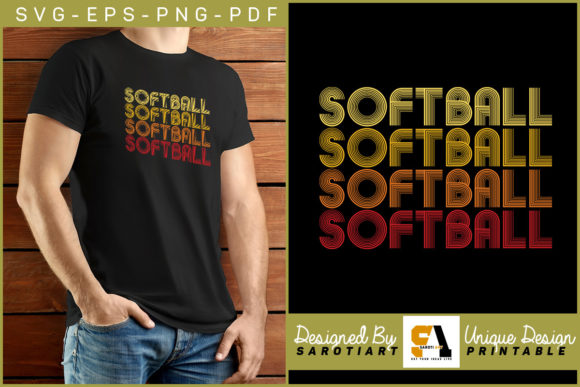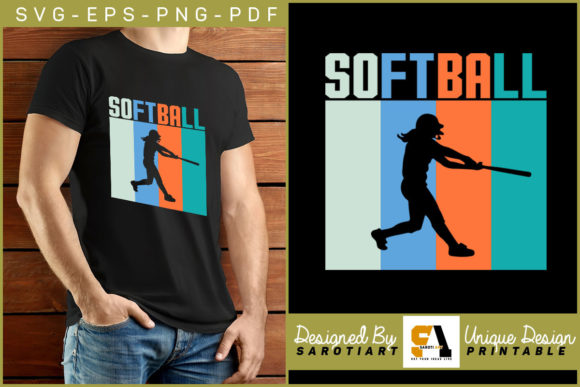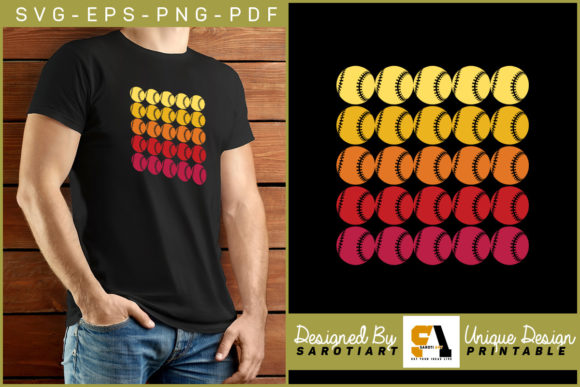
Softball Gaming Ball Vintage Design: Graphics & Crafts
First Impression: Playful, Nostalgic, and Unexpectedly Versatile
When I opened Softball Gaming Ball Vintage Design, my first thought wasn’t “sports merch”—it was “what if a retro baseball card collided with a 90s arcade cabinet?” The illustration carries warm, slightly weathered linework, soft halftone textures, and a subtle grain that reads as handmade—not mass-produced. It feels friendly, energetic, and approachable—ideal for local businesses that want to signal authenticity without leaning into rustic clichés. Think less “vintage farmhouse” and more “neighborhood league spirit meets indie game night.” That mood makes it unexpectedly effective for small business branding beyond athletic apparel: a craft brewery launching a summer softball-themed can series, a handmade soap brand naming a citrus-and-lemon-grass bar “Infield Fresh,” or a children’s boutique building a seasonal “Backyard Games” collection.
Where This Graphic Design Asset Earns Its Keep in Real Local Business Projects
Softball Gaming Ball Vintage Design shines where personality matters most—and clutter is minimal. In packaging design, it works beautifully as a secondary brand element: a circular sticker on a candle jar lid, a corner accent on a kraft paper soap label, or a repeating border on a bakery’s seasonal cupcake box. For product labels, it adds instant recognition—especially when paired with clean, bold typography. As a graphic design asset, it elevates thank-you cards for handmade businesses, gives social media graphics visual punch (think Instagram Stories announcing a “Home Run Sale”), and strengthens visual hierarchy on flyers for local events like farmers’ market pop-ups or community festival booths.
It’s especially valuable for creative entrepreneurs who need printable design flexibility: use it in Canva templates for menu graphics at a coffee shop hosting trivia nights, layer it into editable SVG files for custom hang tags on artisanal snack bags, or scale it down for delicate die-cut stickers on herbal tea tins. Because it’s built with clear outlines and intentional negative space, it holds up well in both digital and print formats—critical for small business owners juggling web design, packaging design, and marketing visuals on tight budgets.
Real Brand Impact: More Than Just Decoration
This isn’t just clipart—it’s a strategic tool for stronger small business branding. When applied thoughtfully, Softball Gaming Ball Vintage Design helps build clearer brand identity by reinforcing a consistent, joyful tone across touchpoints. On shelf, it boosts shelf appeal through emotional resonance: customers don’t just see a product—they recognize a shared memory or feeling. That builds customer trust faster than generic stock art ever could. Used on product mockups or website banners, it supports professional branding without requiring custom illustration—making it ideal for bootstrapped local businesses, food businesses launching limited-edition items, or boutique owners refreshing seasonal campaigns.
Best Fit Use Cases
- Product labels for playful, locally made goods (e.g., hot sauce, kombucha, bath bombs)
- Packaging accents on kraft boxes, cotton bags, or recycled paper tags
- Hero graphics for social media campaigns tied to community events or sports seasons
- Decorative brand elements in editorial design—like recipe cards for a softball-themed picnic cookbook
- Printable inserts for subscription boxes or gift sets
- Seasonal campaign visuals (spring/summer launches, back-to-school bundles, local tournament sponsorships)
Use With Intention—Not Everywhere
While versatile, this graphic design asset shouldn’t be forced where clarity or sophistication is non-negotiable. Avoid using it in formal corporate branding, legal disclaimers, ingredient-heavy layouts (where readability trumps charm), or luxury minimalist brands where every pixel must breathe. It also risks visual competition on crowded packaging—so skip dense multi-layered boxes unless it’s isolated in a clean zone. And never assume it’ll read well on low-contrast backgrounds; test it over your actual brand colors before finalizing.
Practical Brand Designer Notes Before You Deploy It
Before integrating Softball Gaming Ball Vintage Design into client work or your own small business branding, run these checks:
- Test it on real packaging mockups—not just screen previews—to assess scale and impact at physical size.
- Convert to black and white: does the texture and shape hold up? Crucial for stamping, embossing, or monochrome print runs.
- Preview it on small labels (under 1.5” wide)—does detail get lost? Prioritize SVG or vector-ready versions if editing flexibility matters.
- Layer it beside your brand fonts: does it harmonize with serif, sans serif, script, or display type? A mismatch here weakens visual hierarchy.
- Verify PNG transparency—no stray white edges—and inspect SVG paths for smooth scalability.
- Compare it against competitor packaging: does it differentiate your offering—or blend in?
- Confirm commercial licensing covers physical product sales, not just digital use. This is non-negotiable for food businesses, handmade sellers, and local retailers.
Remember: even the strongest graphic design asset only delivers value when aligned with strategy. Softball Gaming Ball Vintage Design won’t fix inconsistent branding—but in the right context, it becomes a quiet ambassador for authenticity, energy, and local character. For creative entrepreneurs building real-world brands—one label, one sticker, one seasonal campaign at a time—it’s not just a digital product. It’s a practical, personality-driven shortcut to professional branding.