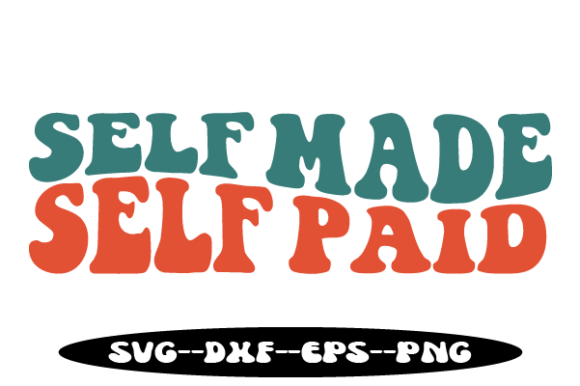
SELF MADE SELF PAID Retro Wavy SVG
As a designer who’s stitched over 300 client projects—from boutique baby onesies to Etsy best-selling tote bags—I opened SELF MADE SELF PAID Retro Wavy SVG expecting something playful but usable. What I found wasn’t just “vintage-inspired”—it was a design with quiet confidence: clean curves, balanced negative space, and that unmistakable mid-century wobble that feels handmade without looking messy. It’s not loud or cluttered; it’s the kind of graphic that whispers “small business pride” rather than shouting it.
A Real Moment: Embroidering This on a Linen-Cotton Kitchen Towel
Last week, I used SELF MADE SELF PAID Retro Wavy SVG as the centerpiece for a set of embroidered kitchen towels—intended for a local maker’s holiday pop-up. I chose linen-cotton blend fabric for its texture and durability, and opted for a medium-density fill stitch with subtle satin-stitched edges. The result? A design that held its shape beautifully across the weave, with gentle wave peaks translating into soft, rhythmic movement under thread. Customers didn’t just notice it—they paused. One said, “It looks like my grandma’s recipe card, but cooler.” That’s the sweet spot: nostalgic, but intentional.
Where This Design Truly Shines
- Tote bag design: Its horizontal flow anchors the center of a canvas tote without overwhelming the fabric. Works especially well when paired with minimal text or a small monogram.
- Sweatshirt embroidery: On brushed fleece, the wavy line reads clearly at 3.5" wide—even from across a room. No lost detail, no bleeding.
- Embroidered patch: When digitized for applique, the curves simplify elegantly. Great for iron-on or sew-on patches on denim jackets or backpacks.
- Baby embroidery: On organic cotton onesies, it reads as gentle and joyful—not too bold, not too delicate. Perfect for gender-neutral nursery decor or milestone blankets.
- Holiday embroidery: Paired with simple red or forest green thread, it adds retro charm to tea towels, oven mitts, or pillow covers—without screaming “Christmas.”
Where to Proceed With Care
This isn’t a one-size-fits-all machine embroidery design—and that’s okay. Its charm lives in its rhythm, not its rigidity. Here’s where attention matters:
- Small hoop sizes (under 4”): The full wave spans comfortably at 4–5", so compressing it below 3" risks flattening the curve’s personality. If you’re stitching on caps or curved surfaces, consider using only the central arc—not the full sweep.
- Textured or stretchy fabric: On terry cloth or jersey, stabilizer choice is non-negotiable. A tear-away + cut-away combo keeps the lines crisp. Skip lightweight tear-away alone—it won’t support those smooth transitions.
- Dark fabric: While the SVG itself is vector-based (ideal for sublimation), remember: embroidery relies on thread contrast. Test black thread on navy twill—it can disappear. Opt for charcoal or deep teal instead.
- Dense stitch areas: The design doesn’t pack heavy fill zones, but where curves tighten, stitch density increases slightly. Always check your digitized version for thread buildup—especially near inner corners.
What It Adds to Your Handmade Product—Beyond Looks
SELF MADE SELF PAID Retro Wavy SVG quietly elevates perceived value. It doesn’t shout “handmade,” but it *feels* handmade—like someone took time to get the rhythm right. That translates directly to customer trust: buyers see intention, not automation. For Etsy sellers and craft fair vendors, this kind of visual consistency builds brand recognition fast. Repeat customers start asking for “that wavy one” by name—not the file title.
It also supports versatility in your craft business. Use it solo as a minimalist statement, layer it beneath custom names for personalized gifts, or reverse-stitch it in metallic thread for wedding favors. Because it’s rooted in retro simplicity—not trend-chasing—it won’t date quickly. That’s rare in digital embroidery files.
Practical Embroidery Designer Notes
- Always test first: Run a sample on scrap fabric matching your final product’s weight and stretch. Watch how the curves hold up after washing.
- Check thread color contrast: Print a black-and-white mockup of your intended layout. If the wave disappears against the background, adjust thread tone—not just brightness.
- Review stitch density: If your digitizer added heavy underlay or dense satin borders, lighten them. Let the shape breathe.
- Confirm hoop size early: Know your machine’s max width before digitizing. This design scales well—but never guess.
- Inspect small details: Zoom in on vector points. Are anchor handles smooth? Jagged nodes cause jerky stitches. Clean vectors = clean runs.
- Test both light and dark backgrounds: Especially if selling printable mockups or digital product previews. What works on white may vanish on heather gray.
- Use proper stabilizer: Medium-weight cut-away for stable fabrics; mesh + tear-away for knits. Don’t skip this step—it’s where many “great designs” become “frustrating projects.”
- Verify licensing: This is a Graphics file—designed for sublimation and print—but if you plan to sell finished embroidered items or resell digitized versions, confirm commercial use rights with the seller. Not all SVGs include embroidery-ready licensing.
In short: SELF MADE SELF PAID Retro Wavy SVG isn’t flashy—but it’s dependable. It fits naturally into real craft business workflows: quick-to-digitize, easy to scale, thoughtful in execution. Whether you're prepping for a holiday craft fair, building an Etsy shop identity, or stitching personalized gifts for loyal clients, it earns its place in your design assets—not because it’s trendy, but because it’s true.