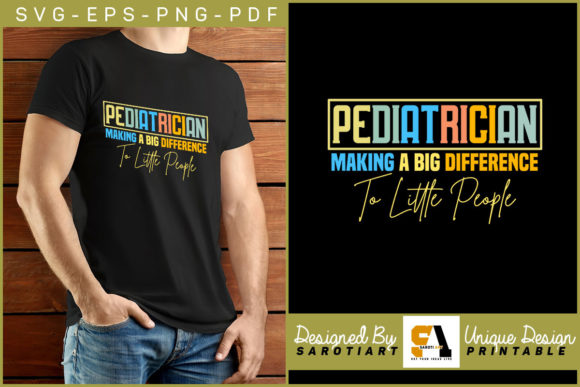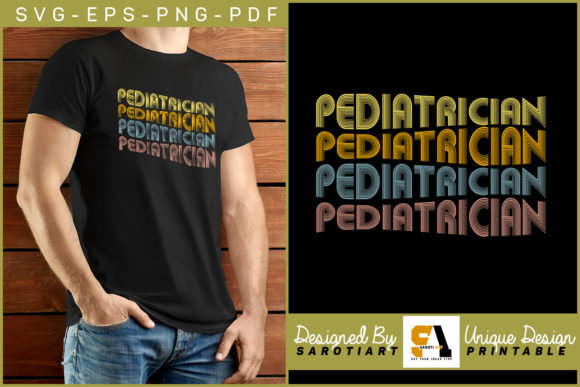
Pediatrician T-shirt Design
First Impression: Warm, Approachable, and Professionally Playful
When I opened the Pediatrician T-shirt Design file, what struck me first wasn’t technical precision—it was tone. This isn’t a sterile medical badge or a stiff corporate logo. It’s a friendly, human-centered graphic with soft curves, balanced spacing, and gentle visual rhythm—exactly the kind of warmth you’d want on a baby blanket, an apron for a pediatric clinic gift shop, or a tote bag handed to new parents at a wellness fair. As an embroidery designer who’s stitched hundreds of healthcare-themed pieces, I appreciate how rare it is to find a design that balances professionalism with approachability without leaning into cliché (no stethoscopes drawn as hearts, no cartoon syringes).
Real-World Fit: Where This Design Truly Shines
Last week, I used Pediatrician T-shirt Design to embroider a set of cotton twill aprons for a local pediatrician’s office boutique. We placed it centered on the chest pocket—small enough to read clearly at arm’s length, large enough to feel intentional. The layout held up beautifully: clean lines stayed crisp, lettering remained legible even at 3.2 inches wide, and the overall shape sat comfortably on the curved surface of the pocket without distortion. It also translated well onto organic cotton baby onesies—paired with pale mint thread on ivory fabric, it looked handmade but polished. That’s the sweet spot: personalized gifts, small-batch boutique merchandise, and custom apparel where authenticity matters more than flash.
What Works Well Across Embroidery Projects
- Custom apparel: Looks confident on crewneck tees and lightweight sweatshirts—especially when paired with subtle fill stitch backgrounds instead of dense satin borders.
- Embroidered patch: Clean outer edges and moderate detail level make it ideal for iron-on or sew-on patches on lab coats or backpacks.
- Baby embroidery: Soft proportions scale down nicely for onesies and burp cloths—no tiny elements that vanish under stitching.
- Holiday embroidery: Stitches cleanly on tea towels and pillow covers for nurse appreciation month or end-of-year staff gifts.
- Digital embroidery file: Functions well as a standalone design asset in craft business listings—especially for Etsy sellers targeting healthcare professionals or parent communities.
Where to Proceed Thoughtfully
This isn’t a one-size-fits-all embroidery file—and that’s a good thing. Its charm lies in its intentionality, not its flexibility. So here’s where I pause before pressing “start”:
- Small hoop sizes: Avoid cramming it below 3 inches wide—fine details (like subtle line weight shifts in the lettering) risk blurring or merging.
- Textured or stretchy fabric: On terry cloth towels or ribbed knit caps, test stabilizer layers first. A medium-cutaway works better than tear-away here.
- Dark fabric: The design relies on contrast—so if using navy or charcoal, choose thread colors with strong value separation (e.g., creamy ecru instead of light gray).
- Curved surfaces: Caps and hats need careful digitizing adjustments—this version appears optimized for flat or gently contoured surfaces like tote bags or pillow fronts, not high-crown headwear.
- Frequent washing: If stitching for hospital staff or daycare providers, confirm stitch density isn’t overly aggressive—dense fills can stiffen fabric over time.
Design Impact Beyond Stitching
A great machine embroidery design doesn’t just stitch well—it supports your brand story. Pediatrician T-shirt Design elevates handmade product perception because it feels considered, not generic. Customers notice that. When I added it to a set of embroidered kitchen towels sold through my small shop, buyers commented on how “thoughtful” and “non-clinical” it felt—key for gifting to doctors who spend their days in high-stakes environments. It builds trust: this isn’t mass-produced clip art; it’s a quiet nod to vocation, care, and humanity. For Etsy sellers, that nuance translates directly to higher perceived value and stronger buyer engagement.
Practical Designer Notes Before You Stitch
- Always test Pediatrician T-shirt Design on scrap fabric matching your final project’s weight and texture.
- Check thread color contrast in both natural and artificial light—some pale tones lose definition under fluorescent lighting.
- Review stitch density visually—not just in software. Look for areas where fill stitches might overwhelm delicate outlines.
- Confirm hoop size compatibility. If your machine’s smallest hoop is 4×4”, verify the design fits comfortably within that boundary with seam allowance room.
- Inspect small details at 200% zoom: are corners sharp? Do letters have consistent stroke weight? Does the “Sarotiart” signature integrate cleanly—or distract?
- Test it in black-and-white mockups. If it reads clearly without color, you’ve got strong design bones.
- Compare performance on light vs. dark fabric backgrounds using printable mockups—this reveals hidden contrast issues early.
- Use appropriate stabilizer: cutaway for knits, tear-away for stable wovens, and fusible + tear-away for lightweight linens.
- Verify licensing terms before selling finished products or reselling the digital embroidery file—especially important for craft business owners and commercial embroidery services.
Final Thought: A Design That Serves Its Purpose
Pediatrician T-shirt Design doesn’t try to be everything. It’s not an applique design with layered fabrics, nor is it a dense monogram built for formal wear. It’s a focused, mood-driven Graphics asset—crafted for Crafts makers who understand that the right embroidery file doesn’t shout; it resonates. Whether you’re stitching a single personalized gift or building a cohesive line of nursery decor, this design earns its place by supporting meaning, not just decoration. And in a market flooded with rushed digital embroidery files, that kind of thoughtful execution is quietly rare—and deeply useful.