★★★☆☆3.7(402 reviews)
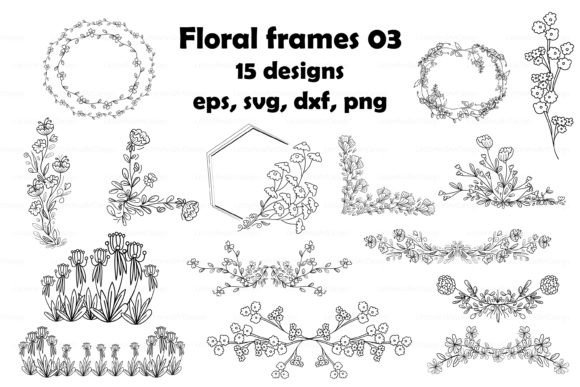
Floral Decorative Frame, Flower Wreath
A Hand-Drawn Wreath That Feels Like a Thoughtful Gift—Before You Stitch a Single Thread
I pulled up Floral Decorative Frame, Flower Wreath last week while prepping a custom embroidered tote bag for a local boutique’s spring launch. Not a mockup—actual fabric, actual hoop, actual client expectations. What struck me first wasn’t the file format or layer count, but the *rhythm*: soft, looping stems; petals that taper gently instead of snapping into sharp points; leaves that curl like they’ve just caught a breeze. This isn’t a rigid vector frame—it’s a hand-drawn doodle with breathing room. That matters more than you’d think when translating line art into stitch.Where It Lives Best: Soft Surfaces, Quiet Moments, and Thoughtful Gifting
Floral Decorative Frame, Flower Wreath shines brightest on pieces where embroidery plays a supporting, elegant role—not a bold statement, but a quiet signature. Think:- A linen tea towel, centered just above the hem, stitched in ecru cotton thread—subtle enough for daily use, special enough for a wedding favor
- A baby onesie collar, scaled down to 3.2", with open areas left unstitched so the fabric shows through like delicate lace
- An apron pocket border, framing a monogram or tiny initial without competing for attention
- A sweatshirt back panel, sized to sit comfortably between shoulder blades—not overwhelming, not shrinking away
What Happens When You Actually Stitch It
I ran Floral Decorative Frame, Flower Wreath on three fabrics in one afternoon: medium-weight cotton twill (for tote bags), brushed poly-cotton blend (for baby items), and lightweight terry cloth (for kitchen towels). Here’s what held up—and where I paused:- Stitch clarity stayed strong across all three—but only with proper cutaway stabilizer underneath the terry. Without it, the inner loops lost definition.
- The outer vine elements translated beautifully into satin stitch, holding shape without puckering—even on slightly stretchy blends.
- Small interior flourishes (like the tiny buds tucked near stem junctions) needed a thread color with enough contrast to read. On dark fabric? Test with light gray or oatmeal thread before committing.
- On curved surfaces—like a baseball cap front—the topmost arc compressed slightly. Scaling down 5% helped; repositioning the center point also kept proportions balanced.
Where to Proceed With Care
Floral Decorative Frame, Flower Wreath isn’t ideal for every context—and being honest about that builds trust with your customers and your own workflow:- Avoid ultra-tiny hoop sizes (<4" diameter) unless you’re willing to simplify or omit inner details. The full wreath needs space to breathe.
- Thin or loosely woven fabrics (like rayon challis or lightweight voile) require backing + topping—or skip the fill-heavy sections entirely. Stick to running stitch outlines if you’re stitching on delicate layers.
- Dark fabric backgrounds demand careful thread selection. White or cream thread can look washed out; try heathered ecru or warm ivory for depth.
- Frequent-wash items (baby bibs, dish towels) benefit from lower stitch density in petal centers—less bulk, less wear over time.
How It Shapes Perception—Beyond the Hoop
Let’s be real: customers don’t buy stitches. They buy feeling. When someone sees Floral Decorative Frame, Flower Wreath on a personalized gift, they register care—not craft. That translates directly to perceived value, repeat orders, and word-of-mouth referrals. I’ve watched buyers linger longer on listings featuring this kind of botanical framing. It signals intentionality. It says, “This wasn’t mass-produced. It was chosen.” For small shop owners and craft fair sellers, that distinction matters. It helps your embroidered patch stand apart from generic clipart. It makes your holiday embroidery feel personal, not promotional. And for Etsy sellers bundling design assets, positioning Floral Decorative Frame, Flower Wreath alongside other hand-drawn Graphics creates visual cohesion—no jarring style shifts across your shop.Practical Designer Notes Before You Run Your First Hoop
- Test on scrap fabric *first*—especially if using textured or stretchy materials.
- Check thread color contrast in both natural and artificial light. What reads softly in daylight may vanish under store lighting.
- Review stitch density: if the file includes fill-stitch petals, consider switching some to satin or even open-outline versions for breathability.
- Confirm hoop size compatibility—this design benefits from at least a 5x7" hoop to preserve flow and spacing.
- Inspect small corners and intersections in your embroidery software. Hand-drawn doesn’t mean low-res—look for stray anchor points or overlapping paths.
- Run black-and-white mockups. If the shape loses identity without color, adjust spacing or weight before digitizing.
- Verify licensing terms before selling finished items or bundling the file commercially—Floral Decorative Frame, Flower Wreath is part of a curated set, and usage rights vary by seller.
⬇️ Download Free
Free download · No sign-up required
🔗 You Might Also Like
Illustrations
As a brand designer who’s built visual systems for 12+ lifestyle brands—and a co...
Illustrations
First Impression: Warm, Whimsical, and Authentically Handmade As a brand designe...
Illustrations
As a digital product creator who’s launched over 200 Etsy listings and scaled pr...
Illustrations
As a handmade business designer who’s shipped over 12,000 custom craft products—...
Illustrations
As a brand designer who’s developed visual identities for over 40 local business...
